
.jpg)
2026 Best Mosquito Fogging Machine for Home Pest Control
Mosquitoes are one of the most common household pests, especially in warm and humid environments. They can become a serious nuisance around homes, gardens, balconies, terraces, and outdoor living areas. For homeowners looking for an efficient mosquito control solution in 2026, a suitable mosquito fogging machine can help distribute an approved insecticide formulation as a fine mist or fog over the intended treatment area.
However, choosing the best mosquito fogging machine for home pest control requires more than simply selecting the most powerful machine. The right equipment should match the treatment area, application method, formulation label, operator requirements, and local regulations.
What Is a Mosquito Fogging Machine?
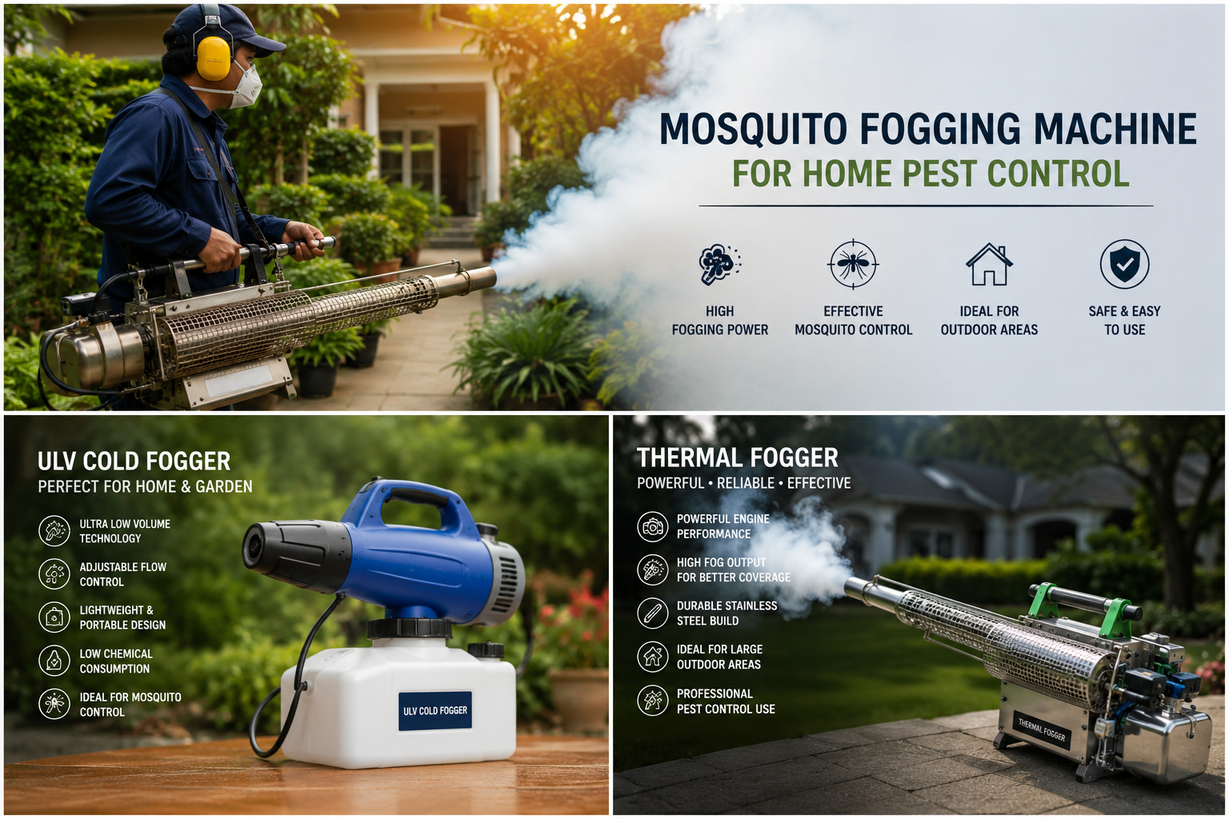
A mosquito fogging machine is pest-control application equipment designed to produce very small droplets of an approved formulation, allowing the treatment to reach areas where adult mosquitoes may rest or fly.
Depending on the machine, technology may include thermal fogging or ULV (Ultra Low Volume) cold fogging. Thermal foggers generate a visible fog using heat, while ULV cold foggers use mechanical atomization to produce fine droplets without thermal generation.
For residential applications, it is important to understand that not every fogging machine or pesticide formulation is approved for indoor household use. EPA guidance emphasizes reading and following the pesticide label and using fogging equipment only when appropriate.
Why Use a Mosquito Fogging Machine for Home Pest Control?
A properly selected fogging machine can be useful when mosquito activity is concentrated around outdoor residential areas such as gardens, lawns, patios, pathways, compounds, and other suitable treatment zones.
Key advantages can include:
✔ Fine-droplet application for targeted mosquito control
✔ Efficient coverage of suitable outdoor treatment areas
✔ Fast application over larger areas
✔ Useful for professional pest-control operators
✔ Suitable for certain approved mosquito-control formulations
✔ Portable options for residential outdoor areas
✔ Easy integration into scheduled pest-control programs
The objective should not be simply to create more fog. Effective mosquito management requires the correct application method, appropriate formulation, correct dosage, and good environmental practices.

Thermal Fogger Vs. ULV Cold Fogger for Mosquito Control
Two commonly discussed technologies are thermal foggers and ULV cold foggers.
Thermal Fogger
A thermal fogger uses heat to create a highly visible fog. It can be useful for suitable outdoor mosquito-control applications where a visible fog helps the operator identify the treatment path.
Thermal fogging is often associated with mosquito-control operations, vector-control programs, agricultural applications, and professional pest management.
ULV Cold Fogger
A ULV cold Fogger produces very small droplets through mechanical atomization rather than heating the formulation. It can be useful where controlled fine-droplet application is required.
For homeowners or pest-control professionals comparing technologies, the important factors include:
✔ Treatment area
✔ Required droplet size
✔ Formulation compatibility
✔ Application speed
✔ Portability
✔ Maintenance requirements
✔ Operator experience
✔ Product-label restrictions
The best machine therefore depends on the application rather than simply the machine's output capacity.
Best Mosquito Fogging Machine Features to Look For
When researching a 2026 mosquito fogging machine for home pest control, consider the following features.
1. Suitable Droplet Size
Droplet size is important because mosquito-control applications depend on delivering the formulation appropriately to the target area. Always use the equipment settings recommended for the specific product being applied.
2. Adjustable Output
An adjustable flow rate can provide greater control over application. This is particularly useful when different treatment areas require different operating settings.
3. Portable Design
For residential gardens, patios, compounds, and outdoor areas, a lightweight and portable fogging machine can make transportation and operation easier.
4. Reliable Engine or Motor
A dependable power system helps maintain consistent operation during treatment. For professional pest-control users, durability and serviceability should also be considered.
5. Chemical Compatibility
Before using any pesticide formulation, confirm that it is approved for the intended application and compatible with the equipment. Never assume that every pesticide can be used with every fogger.
6. Easy Maintenance
A machine with accessible components, simple cleaning requirements, and readily available replacement parts can reduce downtime and maintenance costs.

How to Improve Mosquito Control Around Your Home
A fogging machine should not be considered the only mosquito-control method. The most effective approach combines several preventive measures.
Start by eliminating standing water around the property. Mosquitoes can breed in buckets, plant saucers, discarded containers, tires, drains, and other locations where water collects. CDC guidance recommends regularly emptying, scrubbing, covering, or removing water-holding containers.
Homeowners should also:
✔ Repair damaged window and door screens
✔ Keep doors closed when practical
✔ Remove unnecessary water-holding containers
✔ Keep outdoor areas clean
✔ Cover water-storage containers
✔ Inspect gardens and shaded areas regularly
✔ Follow approved mosquito-control product labels
✔ Consider professional pest-control services when mosquito activity is persistent
This integrated approach can provide better long-term mosquito management than relying on fogging alone. EPA also identifies integrated pest management as an important approach to mosquito control.
Is Fogging Safe for Home Mosquito Control?
Safety should always be the first consideration.
A fogging machine is application equipment, and the safety requirements depend heavily on the pesticide or formulation being applied. Read the complete product label before use and follow all required precautions.
For pesticide fogging, keep people, children, pets, food, and other non-target items away from the treatment area whenever the product label requires it. Do not use a pesticide in a way that conflicts with its label.
EPA specifically advises using fogging devices only when necessary and following pesticide-label instructions.
It is also important to distinguish a manually operated ULV or thermal fogging machine from a total-release fogger (bug bomb). Total-release foggers have different safety requirements, including vacating the treated area and ventilating it before re-entry.
How to Choose the Best Mosquito Fogger in 2026
Before purchasing a mosquito fogging machine, ask:
Where will it be used?
Determine whether the application is for a garden, backyard, compound, commercial property, agricultural area, or another approved location.
What formulation will be used?
Always verify that the formulation is legally approved and specifically compatible with the equipment and intended application.
How large is the treatment area?
A small portable fogger may be sufficient for limited areas, while professional operators may require equipment designed for larger-scale applications.
Who will operate the machine?
Professional pest-control applications may require trained or licensed operators depending on local regulations.
What maintenance is required?
Check spare parts, cleaning procedures, fuel or power requirements, service support, and warranty availability.
Final Thoughts
The 2026 best mosquito fogging machine for home pest control is not necessarily the machine with the highest output. The right choice is the equipment that provides appropriate application control, matches the treatment area, works with an approved formulation, and can be operated safely.
For homeowners, mosquito control should begin with standing-water reduction, screening, sanitation, and prevention. Where fogging is appropriate, a properly selected thermal fogger or ULV cold fogger can become part of a broader professional mosquito-management strategy.
Frequently Asked Questions
1. What is the best mosquito fogging machine for home pest control?
The best machine depends on the treatment area, application method, formulation compatibility, required droplet size, portability, and local regulations. ULV cold foggers and thermal foggers are two common technologies.
2. Can a mosquito fogging machine be used inside a home?
Only when the specific equipment and pesticide formulation are explicitly approved and labeled for indoor use. Never assume that an outdoor fogger or pesticide is suitable for indoor application.
3. Is a ULV cold fogger good for mosquito control?
A ULV cold fogger can be suitable for certain mosquito-control applications because it produces fine droplets. Its suitability depends on the formulation, target area, equipment specifications, and product label.
4. What is the difference between a thermal fogger and a ULV fogger?
A thermal fogger uses heat to generate a visible fog, while a ULV cold fogger uses mechanical atomization to produce fine droplets without thermal generation.
5. How can I reduce mosquitoes around my house?
Remove standing water, clean outdoor areas, maintain window and door screens, cover water-storage containers, and use appropriate mosquito-control measures according to product-label instructions.
6. Is mosquito fogging safe?
Safety depends on the pesticide, application area, equipment, operator, and compliance with the product label. People and pets should be kept away whenever required by the label, and the pesticide should never be used contrary to its instructions.
7. How often should mosquito fogging be done?
There is no universal schedule. Treatment frequency depends on mosquito activity, environmental conditions, the specific pesticide label, and the mosquito-control program being followed.
8. Does fogging eliminate mosquito breeding sites?
No. Fogging primarily addresses mosquitoes present during treatment; it does not replace removing breeding sites. Eliminating standing water is an important part of long-term mosquito management.
9. What should I check before buying a mosquito fogger?
Check droplet-size capability, flow-rate control, treatment-area suitability, formulation compatibility, portability, power source, maintenance requirements, spare parts, warranty, and local regulatory requirements.
10. Can professional pest-control companies use mosquito fogging machines?
Yes, where permitted, trained pest-control operators can use appropriate fogging equipment and approved formulations as part of a mosquito-management program.
For persistent mosquito problems, consulting a qualified pest-control professional can help determine the appropriate treatment method and ensure that products and equipment are used according to applicable label and regulatory requirements.

CONTACT US:
Tel :+86-134-2518-2762
E-mail : trade@szlrkj.com
Add : 1503, Block 1B, Intelligence Park, Baolong Avenue, Longgang District, Shenzhen, Guangdong Province, China
Copyrights © 2026 & All Rights Reserved by Longray